
Description
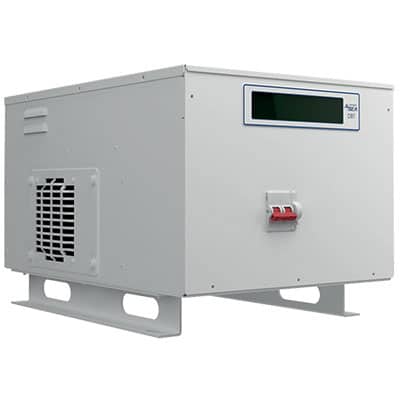
ASEA POWER SYSTEMS DBT12 Gen2 12 kVA 50A Dock Boost Isolation Transformer – 628009-001 is a high-performance smart isolation and automatic boosting transformer engineered to provide clean, stable and dependable shore power aboard cruising yachts and other vessels with 50A 120/240V AC electrical systems. Instead of simply passing marina power through to the vessel, the DBT12 continuously monitors incoming shore power and automatically selects the appropriate transformer gain to compensate for low-voltage conditions while electrically isolating the vessel from the shore-side power system.
Marina shore power can vary considerably depending on pedestal condition, dock wiring, distance from the transformer, demand from neighbouring vessels and overall marina electrical infrastructure. Low voltage becomes especially common when marina loads are high and can cause motors, air-conditioning compressors, refrigeration equipment and other onboard loads to operate inefficiently or fail to start correctly. The DBT12 is designed specifically to address these conditions, accepting a wide 167-270 VAC input range and using three automatic boost levels to keep the vessel powered even when incoming voltage sags by approximately 35%.
At its rated operating point, the DBT12 provides up to 12 kVA of output power with a 50A continuous current rating and 125A overload capability. The North American DBT12 configuration provides center-tapped split-phase 120/240 VAC output while maintaining the incoming shore-power frequency. Efficiency is rated at approximately 97% at rated load, minimizing losses and unwanted heat while delivering substantial power-handling capability from a relatively compact package.
Smart Three-Level Automatic Voltage Boosting
The DBT12 constantly evaluates incoming shore voltage and automatically operates in 1:1, BOOST1, BOOST2 or BOOST3 modes as conditions require. When shore voltage falls, the control system targets progressively higher boost levels; when incoming voltage improves, it transitions toward lower gain settings. The system incorporates hysteresis and a controlled voltage-adjustment response rather than rapidly switching transformer taps in response to every short voltage fluctuation.
ASEA specifies a 15-minute output-voltage adjustment response. A gain change occurs after the required higher or lower gain has remained continuously appropriate for the programmed period and provided an overload condition is not present. This intelligent control strategy helps prevent unnecessary tap changes while allowing the DBT12 to compensate for sustained dock-voltage problems.
Isolation Transformer Protection
The DBT12 is also a true marine isolation transformer. ASEA’s current operations documentation describes the isolation transformer as compliant with the requirements of ABYC E-11 and incorporating a full fault-current shield. Shore power is electrically isolated and normalized before being supplied to the vessel, providing an important layer of separation between the dock electrical system and the vessel’s AC power system.
The transformer architecture also provides a first level of electrical-noise filtering. This combination of galvanic isolation, voltage normalization and intelligent boosting makes the DBT12 particularly well suited to vessels that routinely connect to marina power of varying quality.
Automatic Protection and Recovery
A microprocessor-based control system monitors the DBT12 for over-voltage, under-voltage and over-current conditions. The unit incorporates separate shore and ship power contactors and performs a self-test during startup before connecting power to the vessel. During startup, the DBT evaluates available shore voltage, selects the appropriate gain and then closes its internal power contactors once acceptable operating conditions have been established.
ASEA’s Auto-Restart feature allows the DBT12 to automatically recover following a shore-power brownout, blackout or suitable overload event. Before reconnecting the vessel, the system verifies that valid shore power has returned. The system is designed to handle repeated shore-power failures without requiring the operator to manually reset the transformer after each interruption.
Advanced Onboard Power Monitoring
The integrated LCD provides significantly more information than a conventional isolation transformer. The DBT12 monitors both shore-side and ship-side electrical conditions and displays operating information including frequency, voltage, current, apparent power, real power, power factor and percentage load. The display also identifies operating status and the currently selected voltage-gain mode.
The DBT12 additionally incorporates a kWh meter for accumulated energy monitoring and Modbus RS-485 communications for remote diagnostics and integration into compatible monitoring systems. A USB Type-B service connection is provided for authorized diagnostics and firmware servicing.
Features
- 12 kVA / 50A continuous output for substantial 120/240V split-phase marine shore-power systems
- Three intelligent automatic boost levels compensate for sustained low dock voltage and can maintain operation with shore-voltage sag of approximately 35%
- Marine isolation transformer electrically separates vessel power from the dock supply and incorporates a full fault-current shield
- Advanced microprocessor monitoring and protection for over-voltage, under-voltage, over-current and other abnormal operating conditions
- Automatic restart following qualifying shore brownout, blackout and overload events, with shore-power validation before reconnecting the vessel
- Wide 167-270 VAC input range accommodates significantly varying marina shore-power conditions
- Center-tapped 120/240 VAC split-phase output for North American marine AC electrical systems
- 97% efficiency at rated load minimizes transformer losses
- LCD power monitoring provides shore and ship voltage, current, frequency, kVA, kW, power factor and load information
- Integrated kWh meter provides accumulated energy-use information
- Modbus RS-485 communications support remote diagnostics and compatible monitoring applications
- USB Type-B service port supports diagnostics and firmware updates
- Conformal-coated circuit boards help protect electronic assemblies in demanding marine installations
- Forced-air cooling provides the airflow required for operation at high continuous loads
- Industry-recognized mounting footprint designed for both new vessel construction and retrofit installations
Designed as a Charles Iso-Boost Replacement
One of the most important applications for the DBT12 is replacement of the discontinued Charles Iso-Boost. ASEA specifically developed the original DBT12 after Charles exited the marine isolation-transformer market, with an industry-recognized mounting pattern intended to simplify retrofit installations.
Compared with the legacy 12 kVA Charles Iso-Boost, ASEA’s data sheet highlights a wider operating-voltage range, three intelligent boost taps instead of a single boost tap, a smaller overall footprint and a dramatic reduction in weight. ASEA lists the DBT12 at approximately 58 kg compared with approximately 107 kg for the comparable legacy Iso-Boost – a reduction of roughly 46%.
This makes the DBT12 particularly attractive when replacing an aging or failed Charles Iso-Boost, although existing cabling, circuit protection, mounting arrangements and electrical configuration must still be verified before installation.
Electrical Specifications
- Manufacturer: ASEA Power Systems
- Model: DBT12 Gen2
- Manufacturer Part Number: 628009-001
- ASEA Base Part Number: 628009
- Series: DBT – Dock Boost Transformer
- Equipment Type: Smart marine isolation and automatic boosting transformer
- Input Power Form: Single phase
- Shore Cord Inputs: One
- Input Voltage Range: 167-270 VAC RMS
- Input Frequency Range: 57-70 Hz
- Input Current – Continuous: 50A RMS
- Input Current – Overload: 125A RMS
- Output Power Rating: 12 kVA nominal
- Output Power Form: Split phase
- Nominal Output Voltage: 120/240 VAC, center tapped
- Output Frequency: Same as incoming shore frequency
- Output Current – Continuous: 50A RMS
- Output Current – Overload: 125A RMS
- Voltage Modes: 1:1 plus three automatic boost levels
- Output Voltage Adjustment Response: 15 minutes
- Efficiency: 97% at rated load
- Automatic Restart: Standard
- Protection: Microprocessor-controlled over-voltage, under-voltage and over-current protection
- Isolation: Marine isolation transformer with full fault-current shield
- Marine Standard: Transformer design described by ASEA as compliant with ABYC E-11 requirements
- Power Monitoring: Shore and ship electrical parameters
- Energy Meter: Integrated kWh meter
- Remote Communications: Modbus RS-485
- Service Interface: USB Type-B service port
- Cooling: Forced air
- Required Air Exchange: Approximately 171 CFM / 4.83 m³/min
- Ambient Operating Temperature: 0°C to 45°C, non-condensing
- Approximate Thermal Load at Rated Output: 1,400 BTU/hr
- Mounting Orientation: Horizontal deck mount
- Net Weight: Approximately 58.2 kg
- Height: 30.6 cm
- Width: 33.4 cm
- Depth: 47.4 cm
Installation Information
The DBT12 is designed for horizontal deck mounting. ASEA specifies stainless-steel mounting hardware approximately 9-10 mm (3/8″) in diameter. The mounting surface must be flat and dimensionally stable; ASEA specifies a mounting-plane tolerance of approximately 1.6 mm (1/16″). Resilient mounts should not be installed directly between the DBT and the mounting surface unless an approved shock-mounting arrangement has been engineered for the application.
For proper airflow, ASEA recommends approximately 30 cm of access in front of the unit, with at least 15 cm at the left-side air intake and 15 cm at the right-side air outlet during normal operation. Additional clearance is recommended when service access is required, including approximately 35 cm above and 5 cm behind the unit.
The installation compartment must provide adequate ventilation. At rated load the DBT12 produces an estimated thermal load of approximately 1,400 BTU/hr and requires approximately 4.83 m³/min (171 CFM) of air exchange. Air discharged from the unit should not be allowed to recirculate directly back into the cooling-air intake.
Electrical Connection Information
The DBT12 is equipped with compression-type shore and ship power terminal blocks. ASEA specifies an accepted conductor range of approximately 2.5 mm² through 35 mm² (14 AWG through 2 AWG) for the DBT12/DBT15 terminal blocks. An optional stud-type terminal-block arrangement is also available from ASEA as part number 628806.
Power cables can enter the enclosure from the right side or the bottom. External cord grips, cable sealing, conductor sizing, input over-current protection and an appropriate disconnecting means must be selected for the particular vessel installation and applicable marine electrical standard.
The DBT isolates ship power from shore power and shore-side equipment grounding in the manner of an isolation transformer. The vessel-side grounding reference therefore has to be correctly established during installation in accordance with the applicable marine electrical standard. Installation and service should only be performed by personnel qualified to work on high-current marine AC electrical systems.
Important Power-Rating Note
The 12 kVA rating is based on nominal output voltage. ASEA specifies that the DBT is current-limited, meaning the actual power available can be affected by incoming shore voltage. Customers should therefore not assume that 12 kVA remains available under every possible low-voltage condition simply because the transformer is capable of boosting the output voltage.




Reviews
There are no reviews yet.